
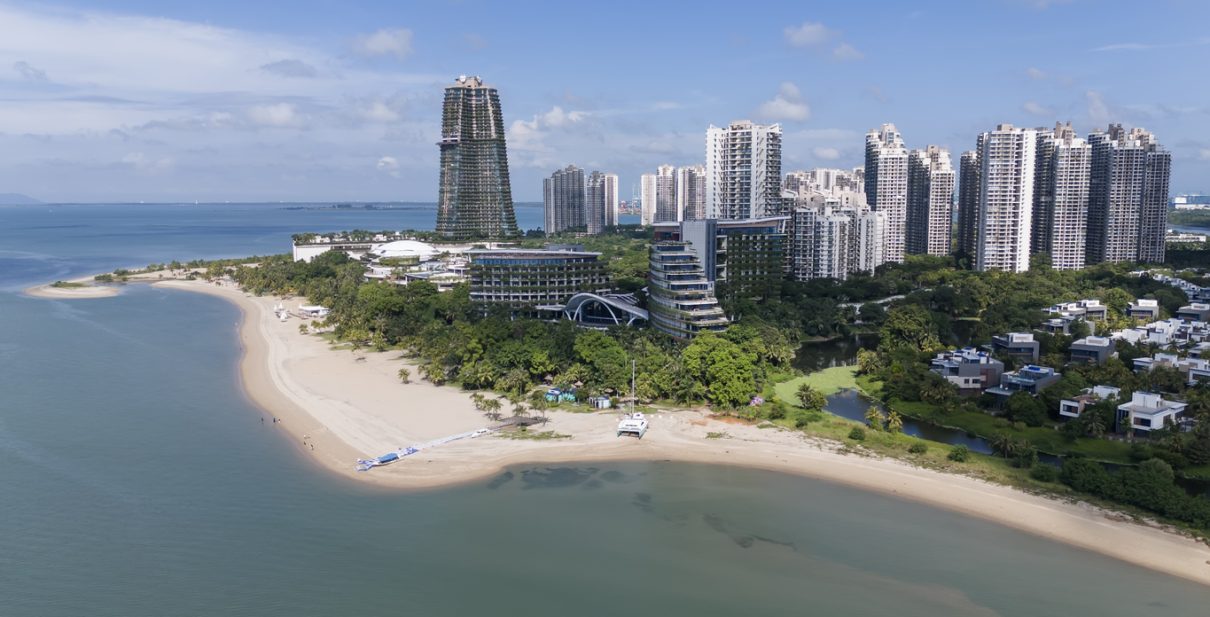
Forest City is an ambitious development in the state of Johor, near Singapore, that has attracted considerable controversy since its launch. Originally conceived as a major township built largely on four reclaimed islands, it promised an impressive range of residential, commercial, and recreational facilities.
But progress has been much slower than expected, and the large number of empty apartments has raised concerns about future demand and resale values. Few people regard Forest City as an obvious property investment today. However, the situation changes when purchasing a property is combined with obtaining a Malaysia My Second Home (MM2H) visa.
The government’s Special Financial Zone (SFZ) MM2H programme offers preferential terms to applicants buying qualifying properties in Forest City. The development is also linked to the wider Johor–Singapore Special Economic Zone, which is attracting considerable international business interest. The question is whether buying a property in Forest City makes better financial sense than applying for a national MM2H visa.
TWO DIFFERENT RESIDENTIAL OPTIONS
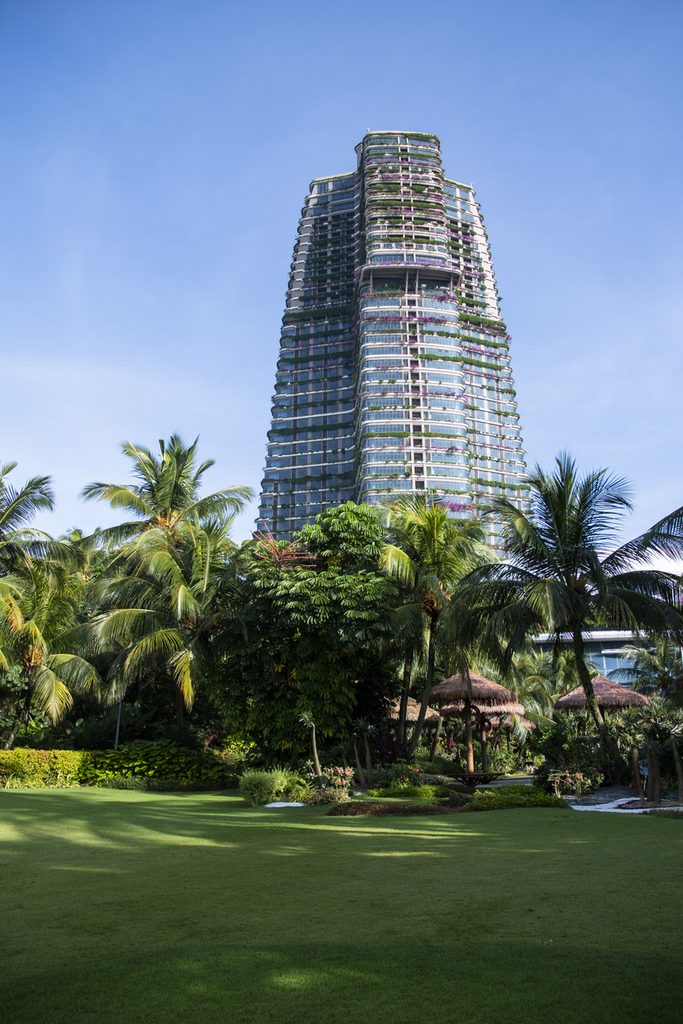
Forest City offers two quite different residential environments and a path to MM2H visas.
The main development occupies the first of four originally planned reclaimed islands. Although relatively quiet during the week, it is well maintained, with landscaped public areas, restaurants, shops and completed residential towers. Smaller apartments start at around RM500,000 for approximately 500 square feet. These are often the most economical option for applicants primarily interested in obtaining the SFZ visa rather than actually living in Forest City.
A different proposition is available at Forest City Golf Resort, on the mainland approximately 20 kilometres away. This development offers championship golf facilities and several hundred landed villas in landscaped surroundings. Smaller villas generally start around RM1.1 million, with built-up areas of approximately 2,000 to 3,000 square feet. For retirees or couples looking for a spacious home in peaceful surroundings, these may be considerably more attractive than the island apartments.
THE FINANCIAL ADVANTAGES OF THE SFZ VISA
The principal attraction is the substantially lower fixed deposit requirement. Under the national Silver MM2H programme, applicants must place USD150,000 in a Malaysian fixed deposit. The SFZ requirement is USD65,000 for applicants aged 21–49 and only USD32,000 for those aged 50 and above.
For applicants aged 50 and above, the main differences are:
| Requirement | Silver MM2H | Forest City SFZ |
| Initial fixed deposit | USD150,000 | USD32,000 |
| Minimum property purchase | RM600,000* | Around RM500,000 |
| Potential FD withdrawal | USD75,000 | USD16,000 |
| Visa validity | 5 years | 10 years |
| Property holding period | 10 years | 10 years |
*Higher minimum property prices may apply in certain states.
Both programmes require a property purchase. However, the lower fixed deposit and longer visa validity make the SFZ particularly attractive to older applicants. Some buyers like the lower-cost units offered on the islands, and some choose not to live there, preferring to rent elsewhere in the peninsula. Others have chosen the golf resort because they intend to live there and like the idea of a golf resort. The fixed deposit remains the applicant’s asset and earns interest, while the property remains an investment with uncertain future value.
WILL FOREST CITY PROPERTY APPRECIATE?
This is probably the most difficult question. Forest City has a substantial supply of completed apartments, many still unoccupied. There is little evidence of significant short-term price appreciation. Malaysia also faces a wider property oversupply problem. According to the National Property Information Centre, there were 33,094 completed but unsold residential properties nationwide in the first half of 2026.
On the positive side, Johor is attracting substantial international investment, particularly through closer economic cooperation with Singapore. This should generate employment and additional demand for residential accommodation. However, economic growth in Johor does not automatically mean Forest City property prices will rise. Much depends on attracting permanent residents, businesses and a more active community. Buyers need to be aware that qualifying MM2H properties generally must be retained for ten years (although you can sell to buy a higher-priced unit), limiting their flexibility to sell.
PROPERTY VERSUS FIXED DEPOSIT
A fixed deposit presents a very different financial proposition from property ownership. If you earn 4% annual interest and reinvest it, the fixed deposit will grow by close to 50% over ten years and of course the principal remains yours, although access is restricted during participation in MM2H. By contrast, property may appreciate or decline in value. Owners also face maintenance charges, sinking fund contributions, assessments, legal fees, and other expenses. Selling may also be difficult when many similar apartments compete for buyers.
Rental income could offset some costs. Forest City apartments are advertised for long-term rentals and short stays through platforms such as Airbnb. However, advertised rental rates are not necessarily achievable, and occupancy rates are uncertain. returns. Buyers might be best to treat potential rental income as a bonus rather than a certainty.
SOME UNWELCOME PUBLICITY
Forest City has also experienced negative publicity. In July 2026, the Network School, a residential and working community for technology entrepreneurs and digital nomads, was ordered to cease operations at its Forest City premises following licensing issues. Separately, Johor police announced the arrest of 335 suspects connected with alleged online scam syndicates operating from Forest City.
These incidents did not imply wrongdoing by the development itself or its wider residential community, but they inevitably affect perceptions.
DOES BUYING MAKE FINANCIAL SENSE?
For applicants who do not intend to live in Forest City, the attraction is principally the lower financial commitment required for an MM2H visa. The savings in fixed deposit requirements can be substantial, particularly for those aged 50 and above, with only RM16,000 left on deposit after withdrawing 50%. However, buyers must balance these savings against the risks of purchasing property in a development where future demand remains uncertain.
The national Silver programme offers greater flexibility in choosing where to buy, although the fixed deposit requirement is considerably higher. For people intending to live in Forest City, the calculation changes, as the accommodation itself provides value and saves on rental expenses elsewhere. This is where the golf resort villas may be especially attractive. They offer considerably more space, pleasant surroundings and a lifestyle that could appeal to retirees, particularly keen golfers.
THE VERDICT
Forest City remains a gamble as a property investment. Its original ambitions have not been fully realised, and the substantial supply of unsold apartments cannot be ignored. Johor’s improving economic prospects and proximity to Singapore offer reasons for optimism, but they do not guarantee capital appreciation.
The SFZ MM2H programme makes the most sense for applicants seeking a lower-cost route to long-term residence in Malaysia, particularly those aged 50 and above. One important distinction is that SFZ applicants must acquire their qualifying property before visa endorsement, whereas national MM2H applicants generally have one year to complete their purchase. Ultimately, Forest City is easier to justify as part of a long-term plan to live in Malaysia than as a straightforward property investment. Its visa advantages may make the purchase worthwhile, but applicants should carefully consider their financial circumstances, lifestyle preferences, and tolerance for risk.